
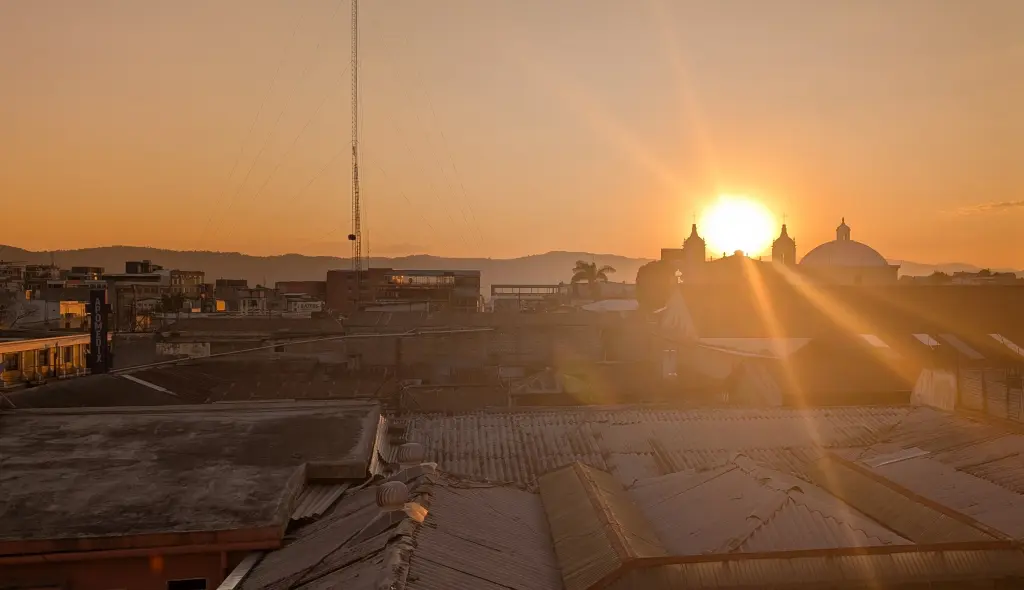
Huehuetenango, Zaculeu & Why You Should Visit Guatemala’s Amazing Western Highlands (Part 2)
Accommodation and Cost of Living in Huehuetenango
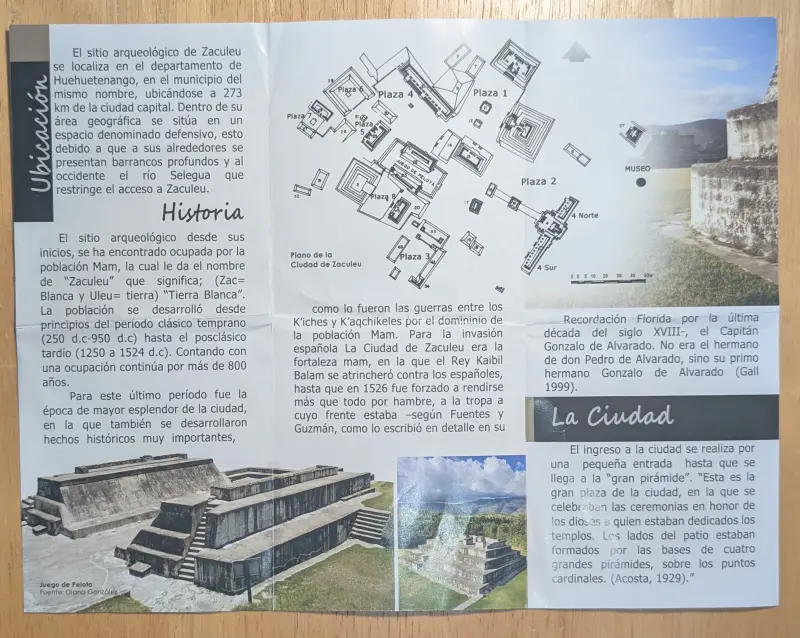
Continuing my last post, I wanted to talk about Huehuetenango a bit more, and discuss the ruins of Zaculeu and I had a chance to visit while there.
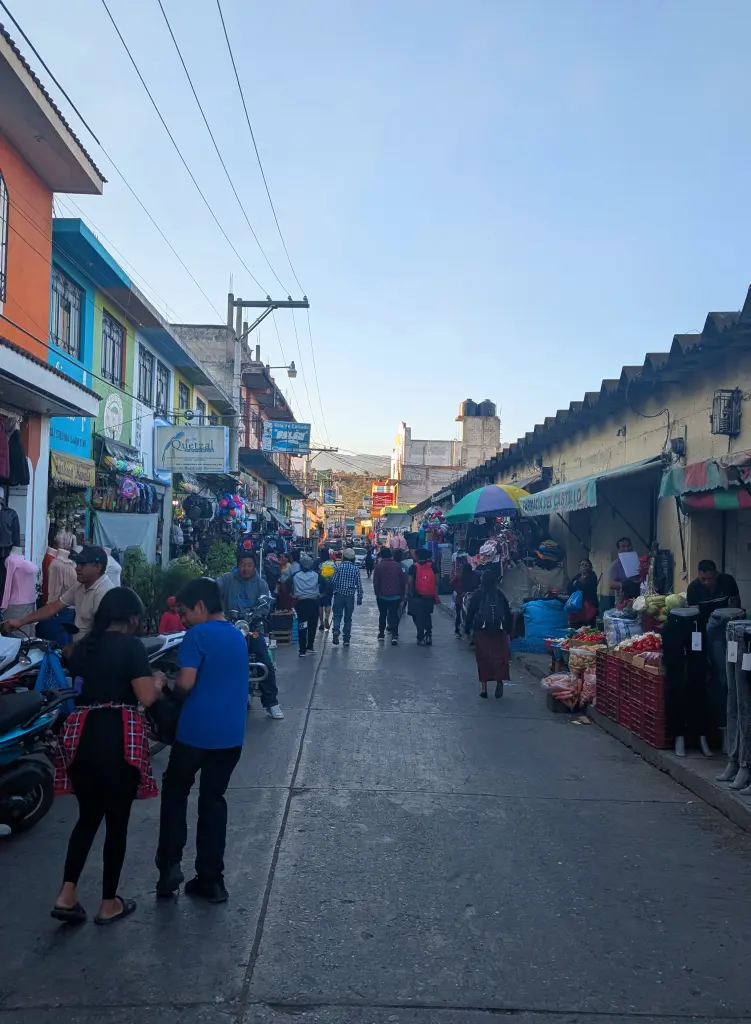
Huehuetenango is a great stop for anyone traveling through Guatemala, it’s a big city, with lots of things to see and do. If you like history, well, it’s the historical capital of the Mam Empire, the current capital of the region and is about 90% Mam Mayan descendants.
Huehuetenango – or “Huehue” for short – is a heavily traditional, culturally strong part of Guatemala with massive Mayan influence. Because it sits high up in the Western Highlands, it offers a completely different climate than what most people expect from the country. It gets significantly cooler up here, with nighttime temperatures dropping down to a crisp 7 or 8 degrees Celsius.
It is also an incredibly affordable place to base yourself. You can find comfortable accommodations right in the center of the local market area for around $24 CAD ($18 USD) a night, complete with a private bath, a comfortable bed, and basic kitchen amenities like a hot plate for making morning coffee. Booking a room on the back side of a central building ensures you are right in the action during the day, but enjoy a very quiet, restful environment at night.
How to Get to the Zaculeu Ruins
The archaeological park of Zaculeu is located just on a hill near the city. Finding the exact departure point can take a little bit of digging if you aren’t familiar with the area, but the process is very straightforward once you know where to look.
To get there, head over to the bus stop called “Salvador Osorio” (next to the park of the same name) where the local chicken buses depart, located just a couple of blocks away from Huehue’s Central Square. The ride up the hill is short – taking only about 10 to 15 minutes – and costs a meager 3 to 4 quetzales (less than $0.50 USD).
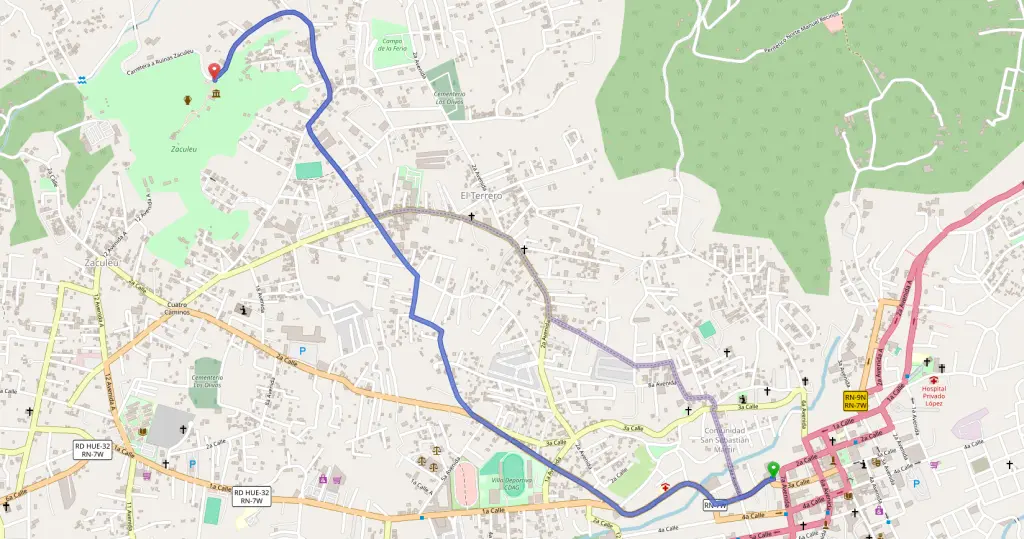
Note on returning: Getting up the hill is simple, but heading back down to town usually requires simply flagging down a returning bus from the roadside as it passes by.
Entrance Fees and Logistics
Zaculeu is a relatively small archaeological park, making it a very low-stress excursion. You don’t need a massive amount of time to visit; you can easily walk around and see the entire site in about 20 to 30 minutes.
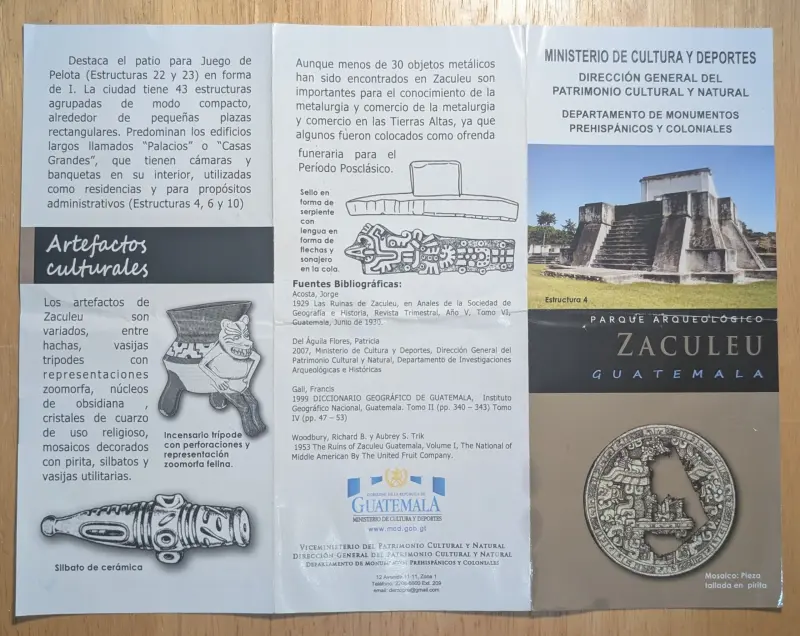
The park is rarely crowded, meaning there is a good chance you might have the entire place almost completely to yourself.
Admission Pricing:
- Local Visitors: 5 quetzales
- International Tourists: 50 quetzales (approximately $5 to $6 USD)
The Fascinating History of Zaculeu
Despite its compact size, Zaculeu holds immense historical significance. Dating back to the Early Classic period, the city served as the proud capital of the Mam Kingdom from 250 AD until around 600 AD. The Mam Kingdom was a major, distinct territory within the broader, un-unified Mayan Empire.
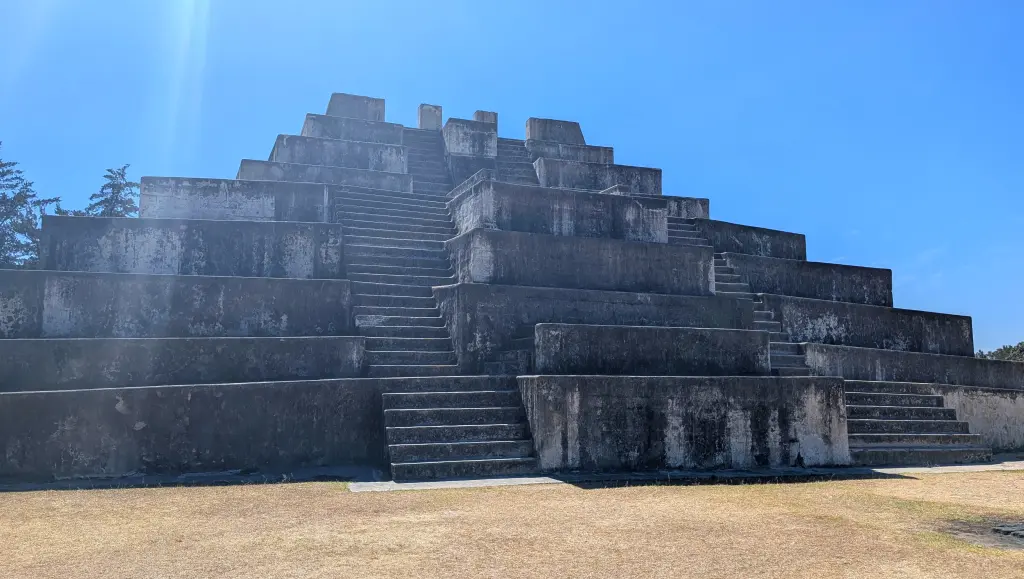
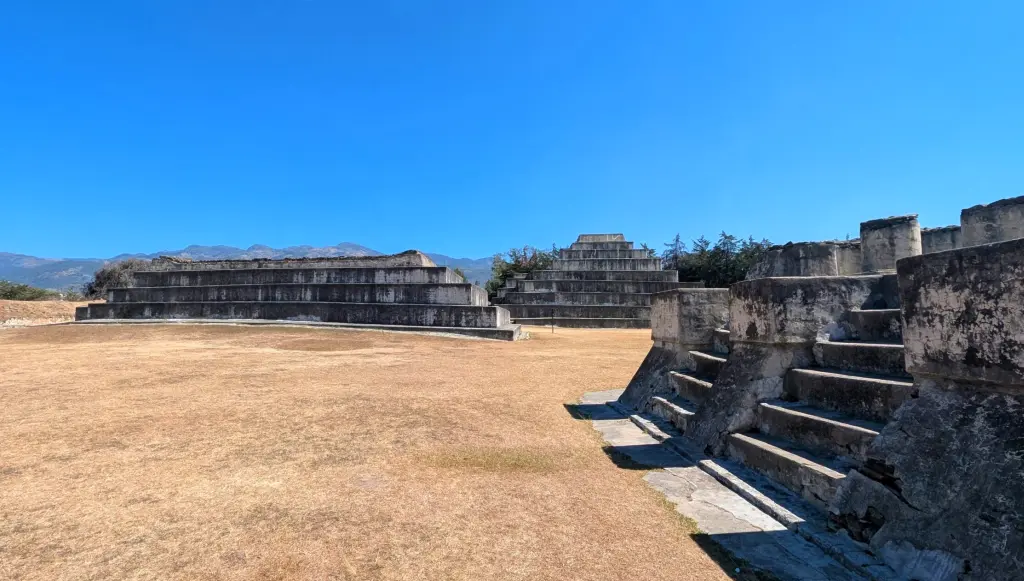
Around the 12th century, the neighboring K’iche Kingdom conquered the site, absorbing the Mam people into their expanding empire. Following the conquest, the K’iche overbuilt their own architectural designs on top of the older Mam structures that survived the fighting, resulting in the unique blend of architectural styles visible today.
The city remained an active, living hub until the Spanish invasion forced a final surrender around 1525. During the Spanish conquest, the fortified ruins became a defensive retreat for the Maya who fled the valley of modern-day Huehuetenango. The Spanish military ultimately starved out the remaining defenders, bringing an end to its era as a bastion of resistance. However, its cultural story never truly ended – even today, the ruins are actively used as a sacred ceremonial site by the modern descendants of the Mam Kingdom.
The Plaster Restoration Controversy
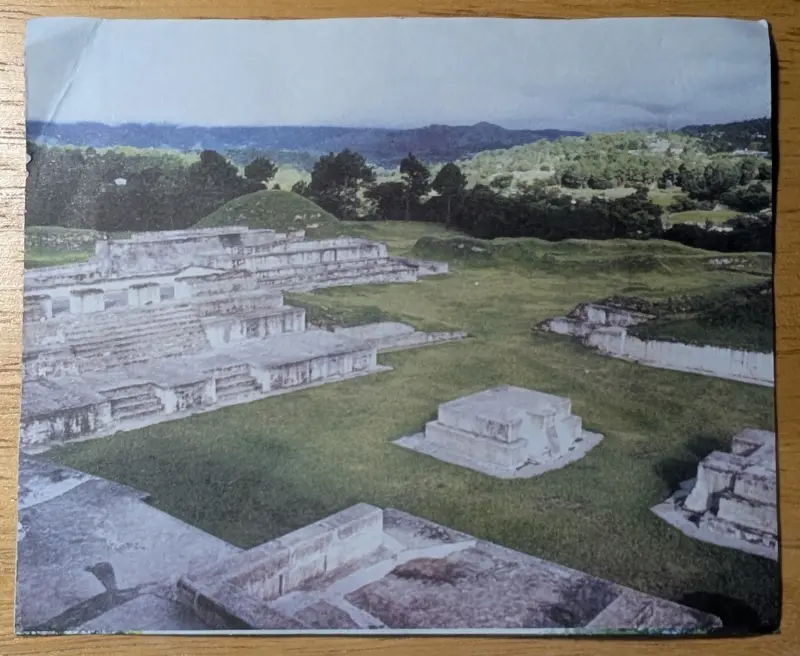
One of the most defining – and debated – characteristics of Zaculeu is its physical appearance. In the 1940s, the United Fruit Company funded a massive excavation and restoration project. The ruins were cleaned up, squared off, and completely plastered over with white protective materials. The goal was to recreate the pristine, geometric look the city originally had at its height around 900 AD.
This aesthetic choice draws a lot of complaints from travelers online who argue that the plaster strips away the “authentic,” weathered feel associated with ancient ruins. Today, most modern archaeologists also disagree with this style of restoration because covering original stone structures with modern materials can obscure historical layers.
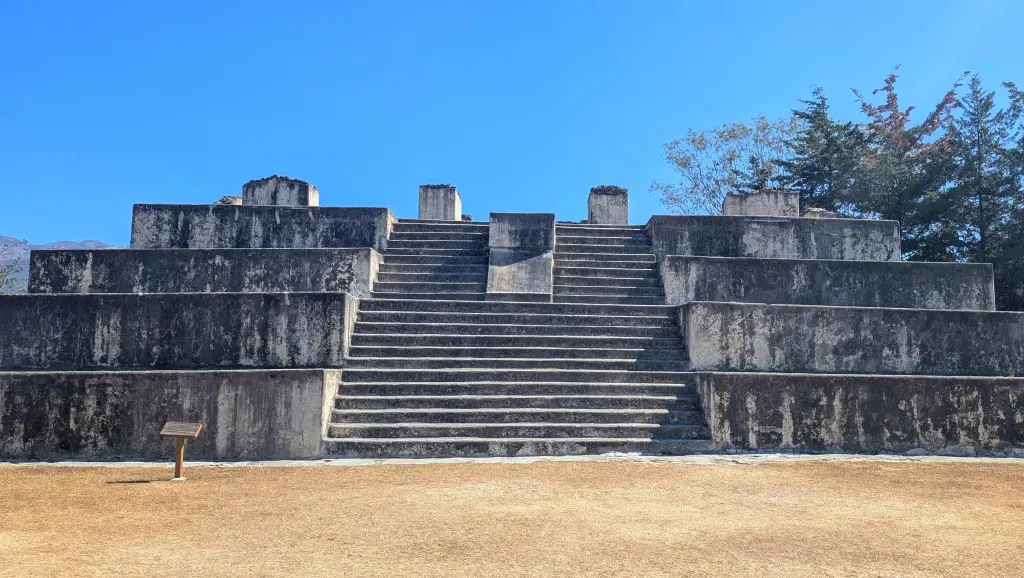
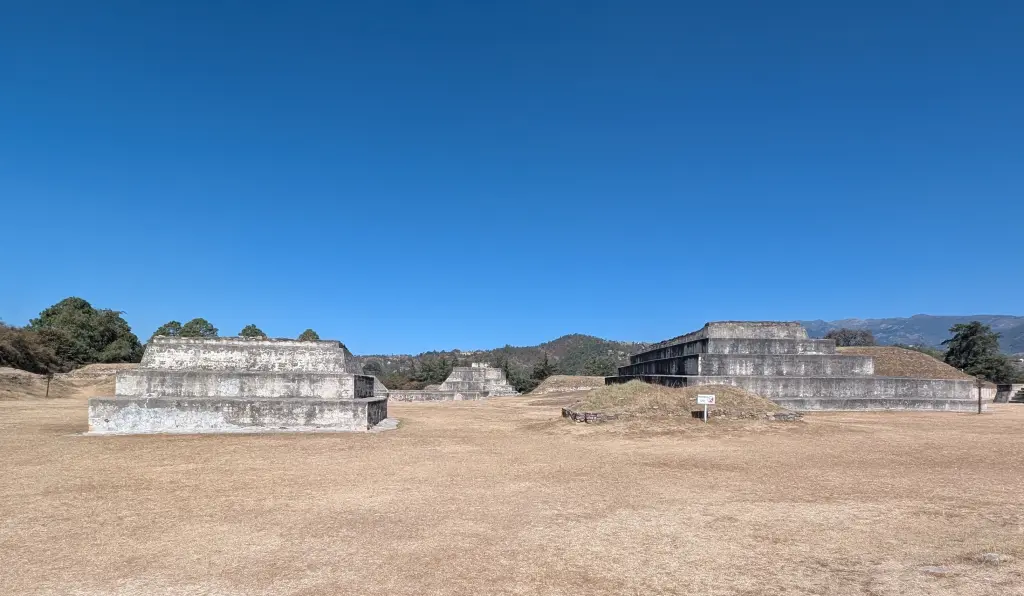
However, there is an undeniable appeal to seeing it. The clean, plastered walls make it incredibly easy to visualize exactly how a grand Mayan city looked a thousand years ago, standing in stark contrast to the standard, crumbling stone sites found elsewhere.
Exploring the Site and the Local Museum
As you wander the main square against a remarkable background of rolling green hills, you will find a variety of distinct structures:
- The Grand Temple: This is an impressive, El Castillo-style step pyramid featuring a wide central staircase leading to a peak platform. During archaeological excavations, researchers discovered a hidden tomb directly underneath this main temple containing multiple burials, tribute artifacts, and gold.
- The Ball Court: A staple of Mayan urban design, the ball court here features the classic angled walls and a uniquely raised entrance area. It serves as a prime example of the plaster restoration work, showing a stark, flat playing field.
- Unexcavated Mounds: While structures like “Structure 6” and “Structure 13” are fully restored, the park is actually full of large, unnatural grassy hills and mounds. These are original, unexcavated temples still buried beneath earth and vegetation, and active archaeological digging continues around the edges of the site today.
Before leaving, take a short walk to the small white building on the left of the park to visit the local museum. A fire broke out at the museum several years ago, resulting in some of the site’s major artifacts being permanently removed for safekeeping. Despite this, it still houses an impressive collection of recovered pieces. Inside, you will find intricate figurines, jewelry, offering pots, ritualistic painted conch shells, historical excavation photos from 1980, an ancient skull, and a beautifully detailed, scorched incense pot that still retains hints of its original color.
Pop Culture Trivia: Tarzan’s Jungle Rebellion

Beyond its ancient history, Zaculeu holds a bizarre spot in 1960s Hollywood pop culture. In 1967, the ruins were used as the primary filming location for “Tarzan’s Jungle Rebellion”, starring actor Ron Ely. Originally filmed as a television pilot, the production was later edited and released as a feature-length movie. The onsite museum displays a collection of fascinating, behind-the-scenes production photos showcasing Ron Ely in character swinging through the plastered Mayan plazas.
Western Highlands Are a Must
As I mentioned previously, I think the Western Highlands route is one that is too often overlooked by travelers through Guatemala. It’s scenic beauty, driving through the mountains from town to town, is worth it alone. So many places that almost never get tourists of any kind.
When I was in Momostenango (more to come on that later!), I was told by a local that I was the only international tourist in town! How cool is that!
It’s very inexpensive too. From lodgings to food, to things to see, it was a step down in costs for sure from what I’d seen in Flores and other places. While in Huehuetenango, I stayed at the Hotel Shinula, and would recommend it as a budget-friendly place in the center of town.
YouTube Vlog
If you’d like to check out my adventures at Zaculeu, and hear more about my reasons why I think this part of Guatemala is certainly worth your time, you can check out my video on Youtube here: